Implemented microwave Radiative Transfer (RT) models
The backscattering signal of a ground pixel consists of surface scattering, canopy scattering, or a combination of both [1]. Right now the implemented RT models focus on areas with open soil (surface-scattering RT models) and vegetated (surface+canopy-scattering models) land surfaces. A schematic overview of considered scattering mechanism within the RT models is shown in Fig. 1. The Water Cloud Model (WCM) considers only \(\sigma_g^0\) and \(\sigma_c^0\) whereas the Single Scattering Radiative Transfer model considers all illustrated scattering mechanism.
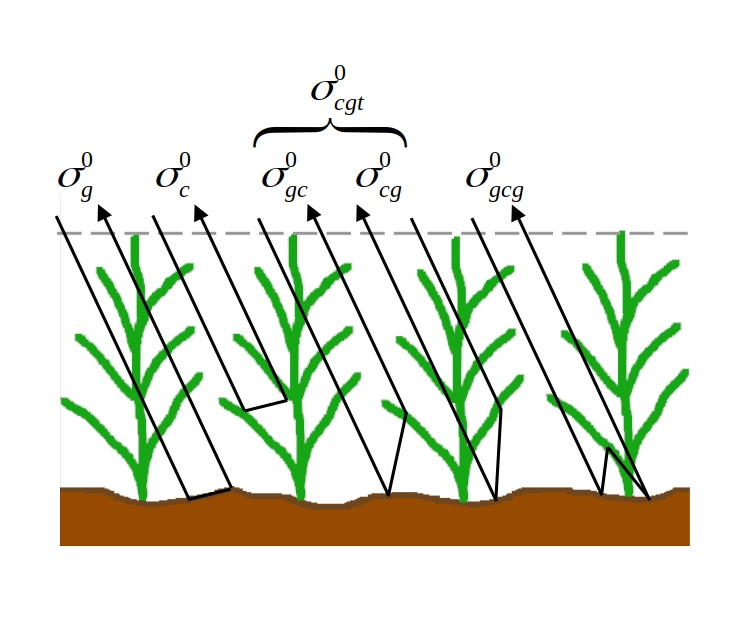
Fig. 1 Schematic overview of scattering mechanism
An overview of the implemented surface and canopy RT models is given in Fig. 2
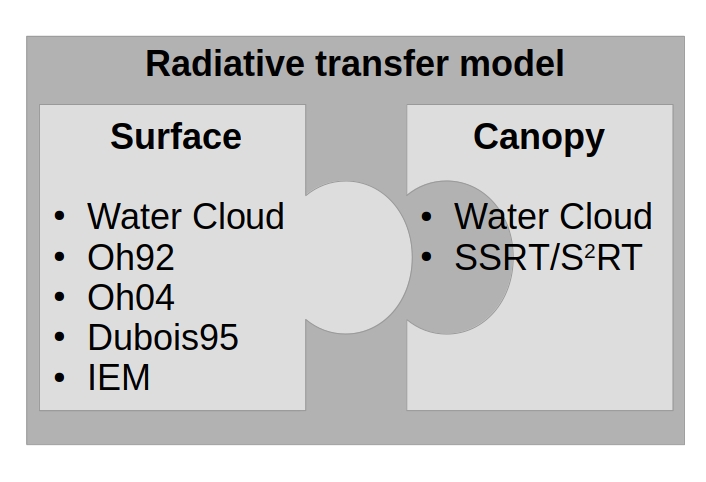
Fig. 2 Schematic overview of currently implemented RT models
Surface-scattering RT models
Water Cloud Model (WCM) surface part
The surface-scattering part (\(\sigma_s^0\)) of the WCM from Attema and Ulaby (1978) [2] for a given polarizationn \(pq\) (\(pq = HH\), \(VV\), or \(HV\)) is defined as
with \(C_{pq}\), \(D_{pq}\) as empirical fitted parameters and \(mv\) as soil moisture content. As the WCM is a purely empirical model, the calibration parameters \(C_{pq}\) and \(D_{pq}\) have to be calibrated for each test site individually.
Oh model 1992 (Oh92)
Oh et al. (1992) [3] developed a RT model for surface-scattering (\(\sigma_s^0\)) which is based on soil moisture and surface roughness in-situ and scatterometer measurements. The empirical determined functions for the different polarizations \(VV\), \(HH\), and \(HV\) are
with
where \(\theta\) stands for the local incidence angle, \(k\) is the radar wave number (\(k = 2\pi / \lambda\)), \(\lambda\) is the wavelength, and \(s\) is the rms height. The Fresnel reflectivity coefficient at nadir \(R_0\) as well as for horizontal \(R_h\) and vertical \(R_v\) polarization can be written as
with \(\epsilon_r\) describing the relative dielectric constant and \(\mu_r\) describing the relative permittivity. The model Oh92 was developed for different frequencies (X- to L-Band) and a broad range of incidence angles (10–70°). The authors state a validity range under bare soil conditions for soil moisture of 9 Vol.% < mv < 31 Vol.% and for surface roughness of 0.1 < ks < 6 [3].
Oh model 2004 (Oh04)
Based on further research by Oh et al. (2002) [4] and Oh (2004) [5] the original apporach from 1992 (Oh92) was simplified by using soil moisture (\(mv\)) instead of dielectric constant (\(\epsilon_r\)) and fresnel reflectivity equations. Thus, in case of transforming the dielectric constant to soil moisture values, no additional information about soil properties (bulk density, sand and clay content) is needed. The model description of Oh04 [5] can be written as
Oh04 is optimized for bare soil conditions and surface roughness of 0.13 < ks < 6.98, soil moisture of 4 Vol.% < mv < 29.1 Vol.% and incidence angle 10° < \(\theta\) < 70° [5].
Dubois model (Dubois95)
In 1995, another empirical based surface-scattering RT model for polarization VV and HH was developed by Dubois et al. (1995) [6]. Backscatter measurements of scatterometers for different frequencies (2.5 GHz to 11 GHz) and incidence angles (30° to 60°) were fitted, thus Dubois et al. [6] (Dubois95) proposed
Dubois95 was optimized for bare soil conditions with \(mv \leq\) 35 Vol.% and \(ks \leq 2.5\).
Integral Equation Model (IEM)
In 1992, Fung et al. [7] developed a theoretical surface-backscattering model named Integral Equation Model (IEM). Over the years the original model was extended to bistatic scattering [8].
The co-ploarized backscatter \(\sigma_{pp}^0\) (\(pp = VV\) or \(HH\)) is defined as
where \(I_{pp}^n\) is defined as
\(W^n\) specifies the Fourier transformation of the nth power of th surface correlation function \(p(x,y)\). The cross polarization \(\sigma_{s_{HV}}^0\) can be calculated by
where the Kirchhoff coefficients \(f_{HH}\), \(f_{VV}\) and complementary field coefficients \(F_{HH}\), \(F_{VV}\), \(F_{HV}\) are formulated as
R is described by the horizontal \(R_h\) ([eq:R_h])) and vertical \(R_v\) ([eq:R_v])) Fresnel coefficient and can be written as
The Fourier transformation of the nth power of the surface correlation coefficient \(W^n(a,b)\) is defined as
The distribution of surface correlation function \(p(x,y)\) is depicted for low surface roughness as Exponential and high surface roughness as Gaussian.
where \(L\) is the correlation length.
Canopy-scattering RT models
Due to many individual scatterers (leaves, needles, and branches) the vegetation canopy is usually described as a canopy-scattering medium. Depending on parameters like radar wavelength or vegetation density the observed backscatter includes scattering components from the soil surface as well as multiple scattering contributions from surface and canopy interactions.
Water Cloud Model (WCM)
The original WCM was developed by Attema and Ulaby (1978) [2]. For keeping the model approach as simple as possible serval assumptions were made. It is assumed that the direct canopy backscattering (\(\sigma_{c_{pq}}^0\)) is the predominant mechanism which is responsible for backscatter signal from the canopy. Furthermore, the vegetation canopy is considered to be a collection of spherical water droplets which are uniformely distributed. Thus, the main describing variables for the canopy layer are vegetation height and cloud density which are assumed to be proportional to the volumetric water content [2].
Combining surface (sigma_{s}^0) and canopy (sigma_{c}^0) scattering the WCM for for a given polarization \(pq\) (\(pq = HH\), \(VV\), or \(HV\)) for vegetation areas is defined as
where \(\sigma_{c_{pq}}^0\) (direct canopy backscatter) and \(T_{pq}^2\) (two-way attenuation by the canopy) are described as
\(A_{pq}\) and \(B_{pq}\) are two fitted model parameters, \(V1\) and \(V2\) are empirical vegetation descriptors and \(\theta\) stands for the local incidence angle. The surface part of the WCM \(\sigma_{s_{pq}}^0\) was described in section Water Cloud Model (WCM) surface part, although in theory the WCM surface part can be substituted by each surface RT model of section Surface-scattering RT models
Single Scattering Radiative Transfer model (SSRT)
In order to account not just for the direct canopy backscatter, but also for multiple canopy-surface scattering interactions, more sophisticated models like the SSRT were developed. The SSRT model described by de Roo et al. (2001) [9] or Ulaby and Long (2014) [1] is a semi-empirical first-order scattering model. A graphical overview of the different scattering mechanisms is given in Figure …. The model consists of a ground component \(\sigma_{g_{pq}}^0\) (\(\sigma_{g}^0 = \sigma_{s}^0 * T^2\)), the direct canopy backscatter \(\sigma_{c_{pq}}^0\), ground plant \(\sigma_{gc}^0\) and plant ground \(\sigma_{cg}^0\) scattering, and a ground plant ground \(\sigma_{gcg_{pq}}^0\) contribution. Thus, the SSRT can be written as
or with
as
The ground component \(\sigma_{g_{pq}}^0\) is defined as
For the surface scattering \(\sigma_{s_{pq}}^0\) each of the surface models in Section Surface-scattering RT models can be used. The \(p\) or \(q\) (p, q = v or h polarization) polarized one way transmittivity of the canopy (\(T_p\) or \(T_q\)) is defined by
with the optical depth \(\tau_p\) as
whereas \(H\) represents the canopy height and \(\theta\) is the local incidence angle. The extinction coefficient \(k_e^p\) accounts for the absorption and scattering losses of the electromagnetic wave through the canopy and can be written as
with
where \(\omega\) is describing the single scattering albedo. Generally, canopies are composed of leaves, stalks, and branches that vary in shape and orientation, exhibiting no linear distributions in the vertical plane. However, for simplicity reasons, \(k_e^p\), \(k_a^p\), and \(k_s^p\) are assumed to follow uniformly distribution in the vertical within the canopy layer.
The direct canopy scattering \(\sigma_{c_{pq}}^0\) is described by
with the canopy backscattering coefficient \(\sigma_{V_{pq}}^{back}\) of the vegetation medium
\(N_v\) is the number of scattering particles per unit volume and \(\sigma_{pq}^{back}\) is the polarized backscattering cross section of a single particle.
The ground canopy (\(\sigma_{gc_{pq}}^0\)) and canopy ground (\(\sigma_{cg_{pq}}^0\)) scattering contributions are defined by
where \(H\) represents the canopy height, \(\sigma_{v_{pq}}^{bist}\) describes the bi-static scattering cross section of a single leaf or stalk, and \(R_p\) is the polarized Fresnel reflectivity (Equations ([eq:R_h]) and ([eq:R_v])).
The total canopy ground contribution \(\sigma_{cgt_{pq}}^0\) as the sum of \(\sigma_{gc_{pq}}^0\) and \(\sigma_{cg_{pq}}^0\) is defined as
The ground canopy ground contribution of the SSRT (\(\sigma_{gcg_{pq}}^0\)) can be written as
Isotropic Scatterers
The scattering pattern for isotropic scatterers is assumed to be uniform along all directions [1]. Thus,
Rayleigh Scatterers
With the assumption of Rayleigh particle, the scatting pattern for hh and vv polarization [1] is assumed to be
Implemented dielectric mixing models for soil
The retrieval of soil moisture by the use of microwave remote sensing and RT models are often dependent on dielectric mixing models.
n the RTM, dielectric mixing models (DMMs) are particularly important in linking soil moisture to emissivity. The DMMs mix the dielectric properties of water and soil, while accounting for physical soil properties such as soil temperature and texture.
Further, several working models have been developed for the calculation of complex permittivity of the wet soils in terms of texture structure, frequency of measurement, moisture content, bound and free water permittivity and bulk dry density of soil at given temperature
Simplistic apprach
The simplistic approach by Dobson (Temperature T=23°C, bulk density \(\rho_b\) = 1.7 g/cm3) is given by
with frequency \(f\) (GHz) and \(f_0\) = 18.64 GHz (relaxing frequency of water at 23°C).
Dobson et al. (1985)
single Debye dielectric model for pure water. Eqs. 4.14
Debye model with conductivity term for e2. Eqs. 4.67
\(\epsilon_0 = 8.854 x 10^{-12}\) Fm \(\epsilon_{w\infty} = 4.9\) after Lane and Saxton (1952
The relaxation time of pure water is defined by
dielectic permittivity
References
Fawwaz Tayssir Ulaby and David G. Long. Microwave radar and radiometric remote sensing. University of Michigan press, Ann Arbor, 2014. ISBN 978-0-472-11935-6.
E. P. W. Attema and Fawwaz T. Ulaby. Vegetation modeled as a water cloud. Radio Science, 13(2):357–364, March 1978. doi:10.1029/RS013i002p00357.
Y. Oh, K. Sarabandi, and F.T. Ulaby. An empirical model and an inversion technique for radar scattering from bare soil surfaces. IEEE Transactions on Geoscience and Remote Sensing, 30(2):370–381, March 1992. doi:10.1109/36.134086.
Y. Oh, K. Sarabandi, and F.T. Ulaby. Semi-empirical model of the ensemble-averaged differential Mueller matrix for microwave backscattering from bare soil surfaces. IEEE Transactions on Geoscience and Remote Sensing, 40(6):1348–1355, June 2002. Conference Name: IEEE Transactions on Geoscience and Remote Sensing. doi:10.1109/TGRS.2002.800232.
Yisok Oh. Quantitative retrieval of soil moisture content and surface roughness from multipolarized radar observations of bare soil surfaces. IEEE Transactions on Geoscience and Remote Sensing, 42(3):596–601, March 2004. doi:10.1109/TGRS.2003.821065.
P.C. Dubois, J. van Zyl, and T. Engman. Measuring soil moisture with imaging radars. IEEE Transactions on Geoscience and Remote Sensing, 33(4):915–926, July 1995. Conference Name: IEEE Transactions on Geoscience and Remote Sensing. doi:10.1109/36.406677.
A.K. Fung, Z. Li, and K.S. Chen. Backscattering from a randomly rough dielectric surface. IEEE Transactions on Geoscience and Remote Sensing, 30(2):356–369, March 1992. URL: http://ieeexplore.ieee.org/document/134085/ (visited on 2019-10-22), doi:10.1109/36.134085.
A.K. Fung, W.Y. Liu, K.S. Chen, and M.K. Tsay. An Improved Iem Model for Bistatic Scattering From Rough Surfaces. Journal of Electromagnetic Waves and Applications, 16(5):689–702, January 2002. URL: https://www.tandfonline.com/doi/full/10.1163/156939302X01119 (visited on 2019-10-22), doi:10.1163/156939302X01119.
R.D. de Roo, Yang Du, F.T. Ulaby, and M.C. Dobson. A semi-empirical backscattering model at L-band and C-band for a soybean canopy with soil moisture inversion. IEEE Transactions on Geoscience and Remote Sensing, 39(4):864–872, April 2001. Conference Name: IEEE Transactions on Geoscience and Remote Sensing. doi:10.1109/36.917912.